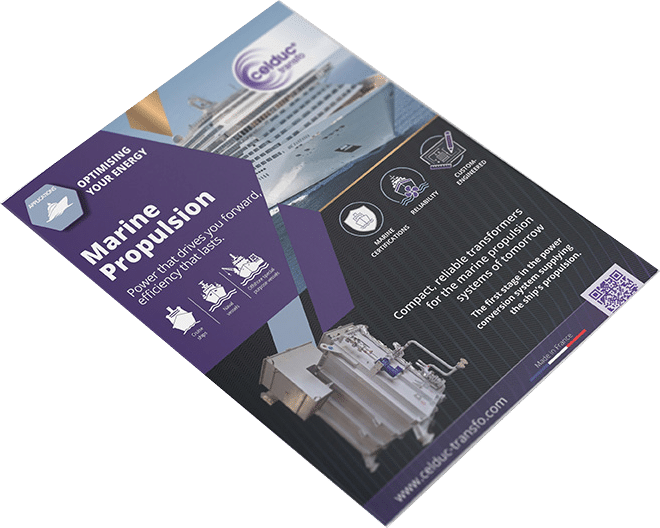
The transformer, first step of reliable energy conversion
How celduc® transfo designs compact, robust transformers for the propulsion of cruise ships, naval vessels and special offshore vessels.
Behind the silent power of a cruise liner or a helicopter carrier lies a complex electrical chain. On electrically propelled ships, the energy produced on board must be transformed, converted and then transmitted to the motors before it sets the propeller in motion. At the very start of this chain sits a discreet but essential piece of equipment: the converter transformer.
This is the expertise on which celduc® transfo, a French manufacturer based in Sorbiers (Loire), has built its reputation, with a promise: “Energy that moves you forward, efficiency that lasts.”
1 – Applications : three major naval sectors
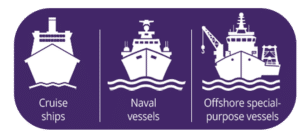
celduc® transfo’s marine propulsion transformers serve three major sectors: cruise ships, naval vessels and special offshore vessels. Their missions differ, but all share the same requirement: maximum availability in an environment where the slightest failure has major operational and safety consequences.
2 – The transformer’s role in the propulsion chain
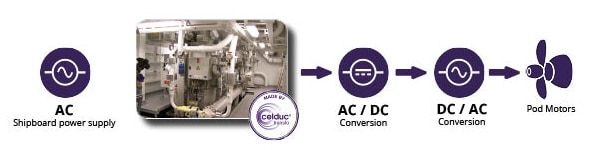
The converter transformer is the first stage of the conversion system that powers propulsion. It all starts with the onboard alternating current (AC) grid: the transformer adapts its voltage and feeds the rectifier, which performs a first AC/DC conversion. A second, DC/AC conversion then takes over to power the motors, or pods, that drive the propeller.
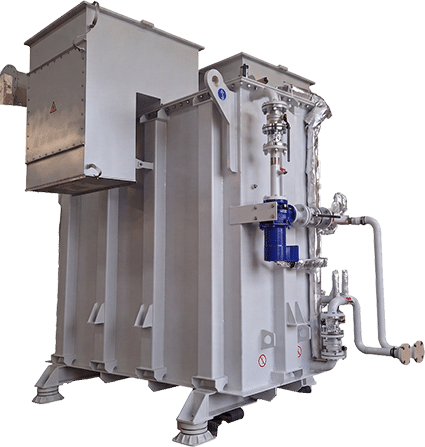
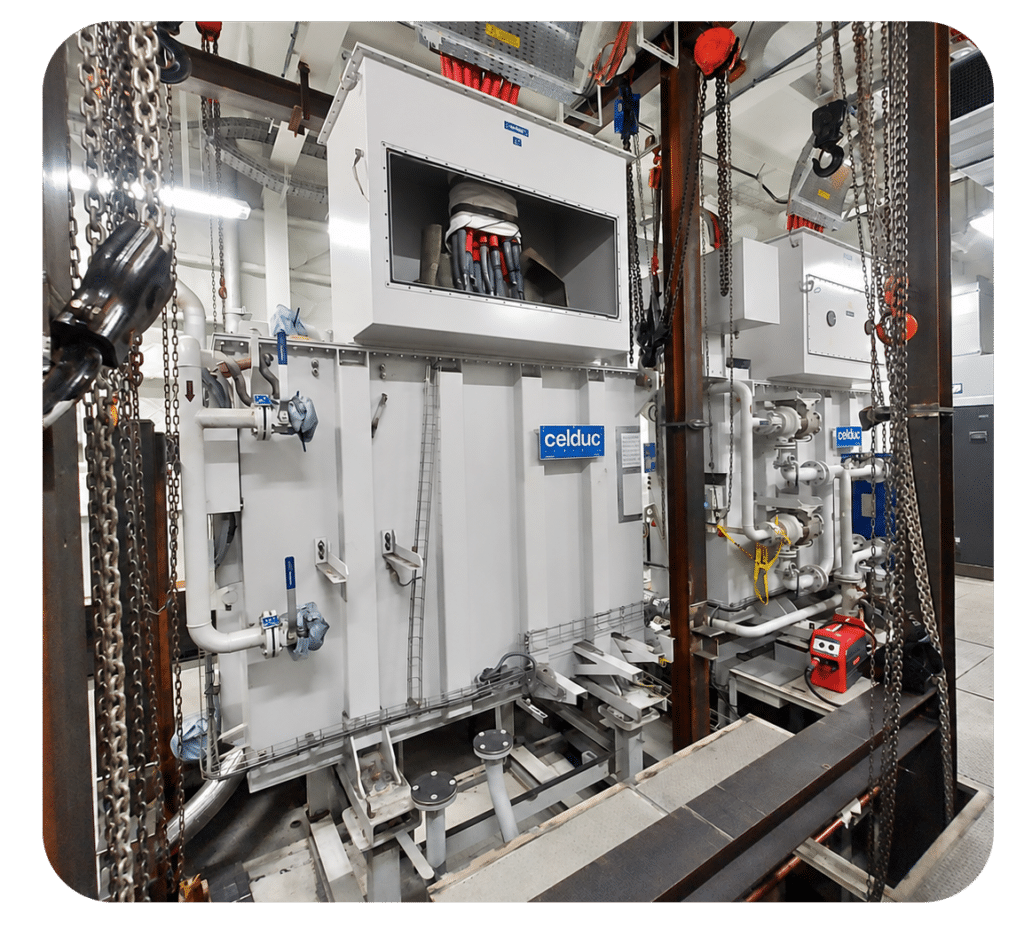
These transformers take into account the harmonics generated by the rectifier, and are built in a double-secondary version (Dd0y1), a configuration suited to supplying converters.
3- A specific design for marine constraints
A marine transformer is not designed like a standard industrial transformer. celduc® transfo adapts each unit to the space constraints and electrical system of the vessel, with a high reliability requirement.
The equipment is designed for demanding onboard environments, taking into account in particular:
engine room temperature;
cooling water temperature;
wave motion.
Enhanced safety
Use of K-class fluids with reduced flammability: synthetic ester (MIDEL) or silicone oil.
Reinforced anti-corrosion treatments, with a CX paint system.
Special tests
winding capacitance measurement;
short-circuit withstand test;
partial discharge measurement;
dissolved gas analysis, etc.
4 –Reduced footprint, a key asset on board
On a ship, every square meter counts. Cooling is generally of the KFWF type, meaning radiator-free, which allows a smaller footprint and better integration into technical spaces.
5- Integrated accessories
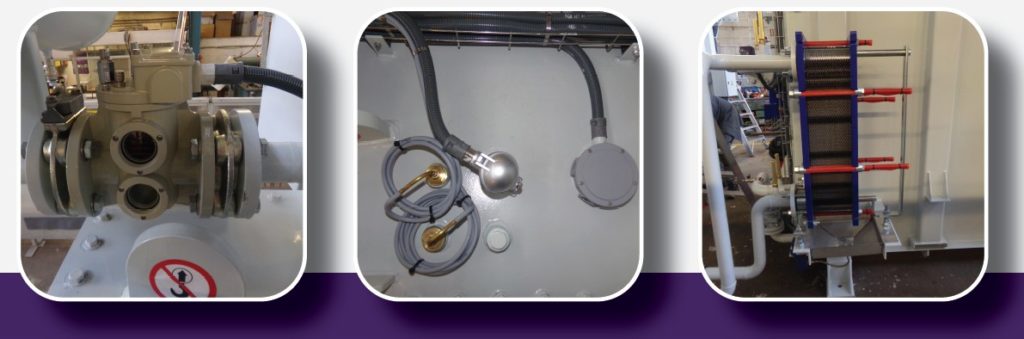
To ease installation and operation, celduc® transfo integrates numerous accessories into its transformers: pump(s), plate or tube heat exchangers, valves, flanges, thermometers, flow detectors, etc.
6 –Prestigious references
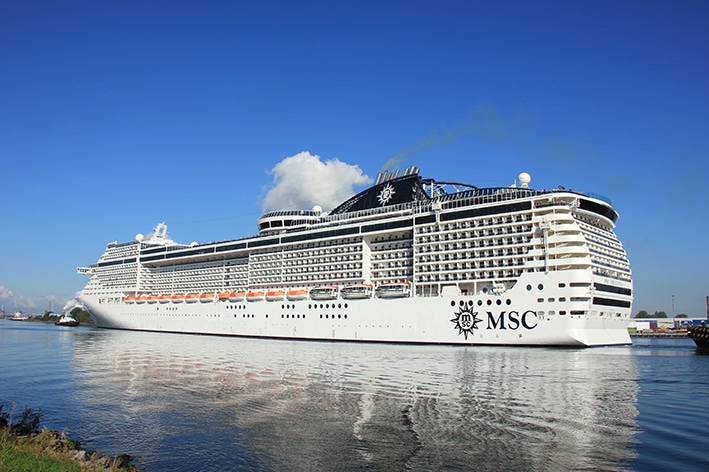
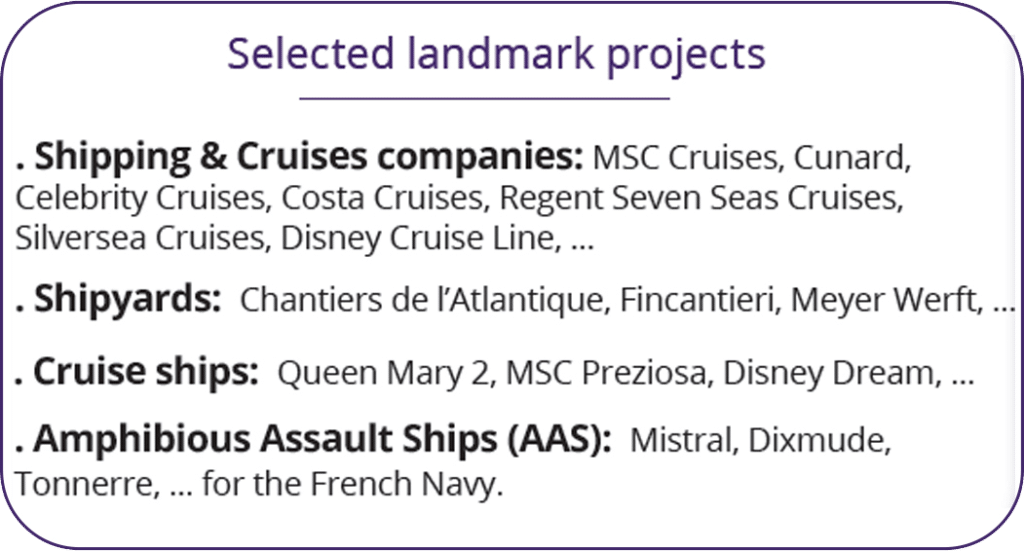
celduc® transfo’s expertise is recognized by the sector’s biggest players. Its emblematic projects include collaborations with shipping companies such as MSC Cruises, Cunard, Celebrity Cruises, Costa Cruises, Regent Seven Seas Cruises, Silversea Cruises and Disney Cruise Line, as well as with shipyards such as Chantiers de l’Atlantique, Fincantieri and Meyer Werft.
These include renowned cruise ships such as the Queen Mary 2, the MSC Preziosa and the Disney Dream, as well as the French Navy’s amphibious helicopter carriers (PHAs): the Mistral, the Dixmude and the Tonnerre.
7 – Our Expertise, your performance
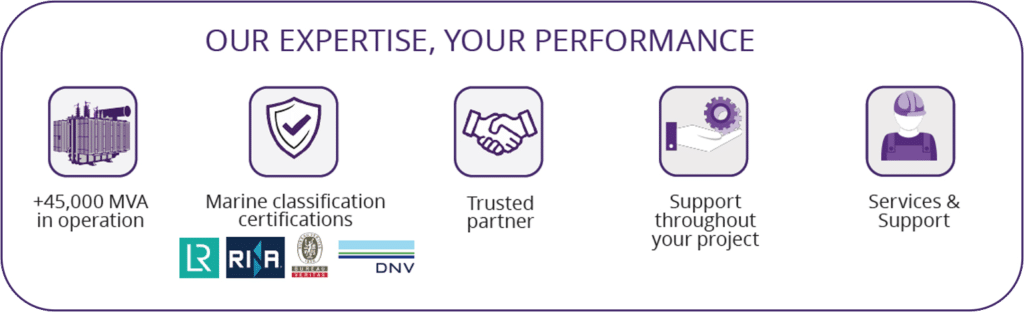
This expertise is backed by more than 45,000 MVA in operation and by marine classification society certifications (Lloyd’s Register, RINA, Bureau Veritas and DNV). It also translates into support throughout the project, complemented by dedicated services and assistance. A trusted partner of shipowners and shipyards, celduc® transfo manufactures its transformers in France, at its Sorbiers site.
Conclusion
Marine certifications, reliability, tailor-made design: these three pillars sum up celduc® transfo’s approach. As electric propulsion continues to grow, having compact, safe transformers adapted to onboard constraints is a decisive performance factor for shipowners and shipyards alike.